BBB: Foxglove
I don’t think foxglove is an endangered garden plant, but I do sense some resistance to growing the usual, biennial, form from seed. Judging from the popularity of the 1-year-to-maturity “Foxy” foxglove, waiting two years for a flower is too long. I can understand, especially when the seeds are so hard to germinate!
I’ve had little success with foxglove seed (Digitalis x mertonensis). From my Winter 2005/6 sowing set, I had a yield of three plants. I was terribly disappointed because I love foxglove. They bring back memories of sunny hillsides in the woods, thick with rosy, flowering spikes. That they are terribly poisonous (but the poison is a medicine in small doses) only increases their allure. I like to pretend that if the apocalypse came, I could be a folk healer. (Alternatively, if I got sucked back in time like Claire of the Outlander novels, I could do the same.) Finally, who wouldn’t want to grow a flower that legend says the fairies sleep within?
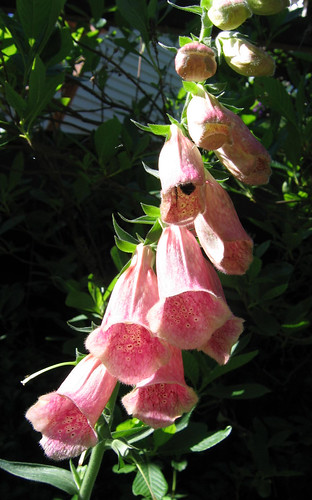 I’m not sure why the seeds were so hard to germinate, but the plants have been tough. I levered the three survivors into shady nooks around the deck and they all survived the winter. The first has bloomed and the other two have pregnant bulges in the middle of their rosettes. Despite my trouble, I am try, try, trying again. I sprinkled an entire packet of seed directly over the earth along the NW side of the deck. No babies yet, but maybe next spring…
Summary
Germination: difficult!
Culture: easy
Form : ugly leaves, but a nice rosette form. Flowers are on a spike.
Scent : none
Color : shades of pink, purple, white
BTW – that’s a bee butt in one of the flowers.
I’ve had little success with foxglove seed (Digitalis x mertonensis). From my Winter 2005/6 sowing set, I had a yield of three plants. I was terribly disappointed because I love foxglove. They bring back memories of sunny hillsides in the woods, thick with rosy, flowering spikes. That they are terribly poisonous (but the poison is a medicine in small doses) only increases their allure. I like to pretend that if the apocalypse came, I could be a folk healer. (Alternatively, if I got sucked back in time like Claire of the Outlander novels, I could do the same.) Finally, who wouldn’t want to grow a flower that legend says the fairies sleep within?
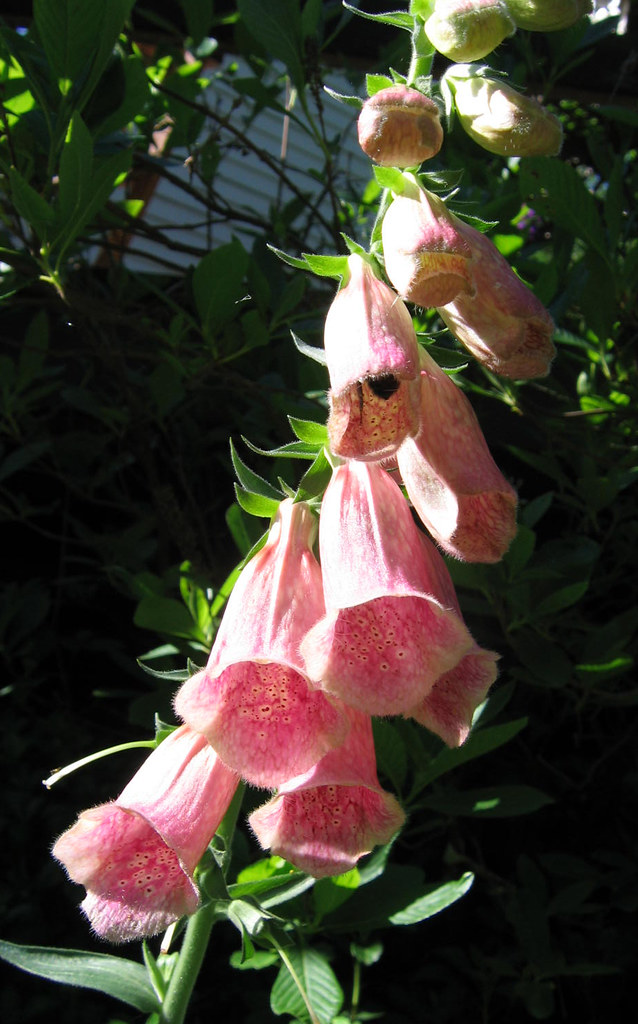 I’m not sure why the seeds were so hard to germinate, but the plants have been tough. I levered the three survivors into shady nooks around the deck and they all survived the winter. The first has bloomed and the other two have pregnant bulges in the middle of their rosettes. Despite my trouble, I am try, try, trying again. I sprinkled an entire packet of seed directly over the earth along the NW side of the deck. No babies yet, but maybe next spring…
Summary
Germination: difficult!
Culture: easy
Form : ugly leaves, but a nice rosette form. Flowers are on a spike.
Scent : none
Color : shades of pink, purple, white
BTW – that’s a bee butt in one of the flowers.
posted by Kasmira at 20.6.07
11 comments